Me, Sofia and the aliens
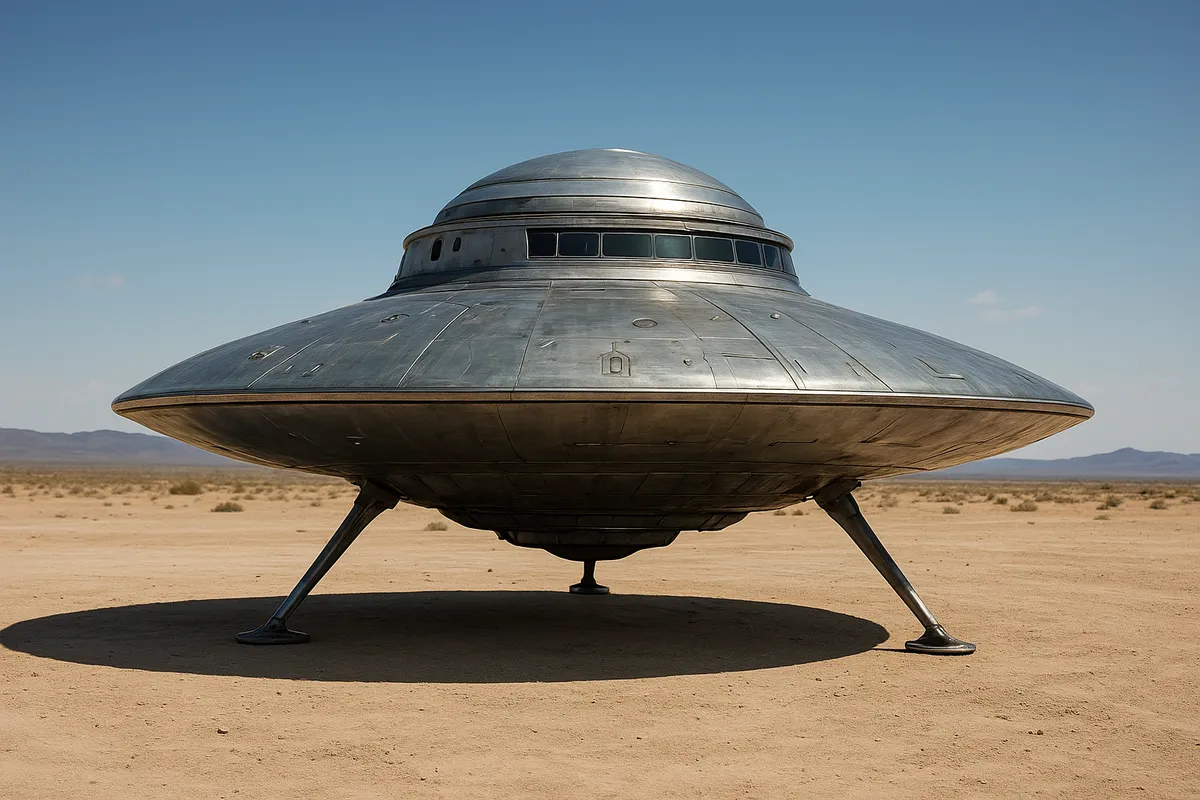
All this brings into focus the question of what would happen if we actually found aliens – or if they found us.
It would be the biggest scientific discovery in history, and would likely have profound – but difficult to predict – effects on every aspect of society, from politics and religion, through to science, technology, the economy and philosophy.
Individuals would probably react in different ways, some with fear and panic; others with awe and wonder.
Surprisingly perhaps, there doesn't seem to be a co-ordinated, overall plan for an eventuality like this.
While the Search for Extraterrestrial Intelligence (SETI) Institute authored a document titled the Declaration of Principles Concerning the Conduct of the Search for Extraterrestrial Intelligence, these protocols only cover what to do if a radio signal from another civilisation is detected, and the document isn't legally binding on nation states.
Beyond this, it's theoretically possible that there's a highly classified government plan, the existence of which is known only to a few key personnel.
However, I got no hint as to the existence of any such document when I handled the UAP issue for the British Ministry of Defence in the 1990s, and neither has such a plan been mentioned in any of the Congressional hearings on UAP.
The nearest Britain came to a plan for making contact with aliens was in 2023, when the Department for Science, Innovation and Technology (DSIT) produced an outline report titled ‘UK readiness for black swan scientific events: Case Study – The discovery of life beyond Earth’.
DSIT's Ideas Lab wrote an eight-page draft before the study was indefinitely paused in 2024.
A key problem in devising any plan is the wide range of variables when it comes to alien life.
Discovering microbial life in our Solar System, for example, would raise the issue of planetary protection – we don't want to be wiped out by the Venusian flu.
Detecting a radio signal from another civilization would raise very different issues: could we decipher a message from aliens; should we reply; what should we say; and who should reply?
The last question raises the issue of who could truly speak for Planet Earth.
No political or religious leader could speak for everyone, and while a scientist or an academic might be a better choice, what about the billions of people who effectively have no voice? Who speaks for them?
These issues were explored during two meetings at Britain’s Royal Society, held in 2010.
The first was titled, ‘The detection of extra-terrestrial life and the consequences for science and society’ and the second, ‘Towards a scientific and societal agenda on extra-terrestrial life’.
These were multidisciplinary events with participation not only from astronomers and astrophysicists, but also from psychologists, anthropologists and theologians.
It was apparent that the religious implications of finding alien life would be profound and potentially controversial in terms of the possible challenges posed to faith and doctrine.
Some senior theologians are already thinking about how to incorporate alien life into their belief systems.
Father José Gabriel Funes, a Jesuit priest who served as director of the Vatican Observatory, has stated: "How can we rule out that life may have developed elsewhere?
"Just as we consider Earthly creatures as ‘brother’ and ‘sister’, why should we not talk about an ‘extraterrestrial brother’? It would still be part of creation."
But what if aliens don't come in peace? Stephen Hawking once warned: "If aliens visit us, the outcome would be much as when Columbus landed in America, which didn't turn out well for the Native Americans."
This ties in with the Dark Forest hypothesis, which suggests alien civilizations generally remain silent, for fear of encountering a more advanced hostile civilization.
As Cambridge University palaeontology professor Simon Conway Morris said at the first of the Royal Society meetings: "If the cosmic phone rings, don't answer."